

Your Travel Experience with Argentinien Pro
Day 1
Transfer from San Cristobal airport to the harbour
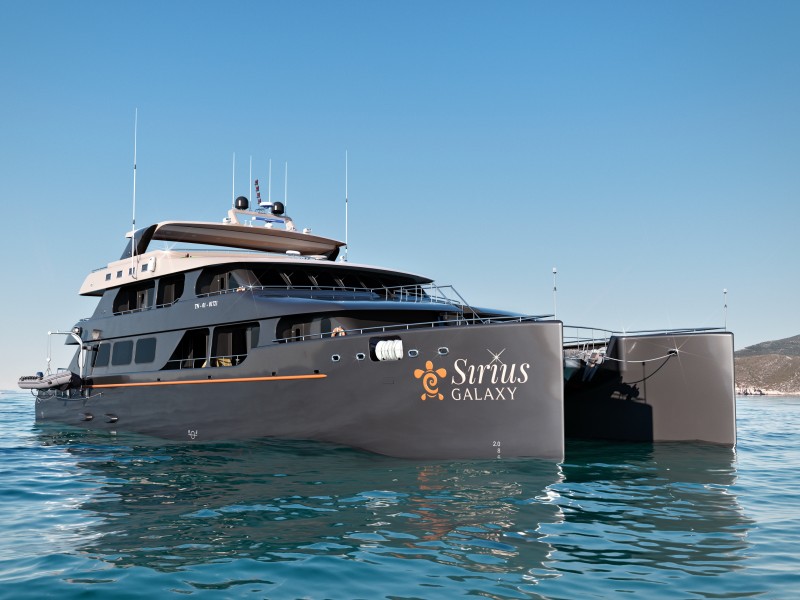
You will arrive on the island of San Cristobal in the morning at the airport and transfer to the harbor to board the ship. The briefing will be conducted onboard.
Lobos Island
Afternoon: The small Lobos Island is situated near to San Cristóbal Island and is home to not only a huge colony of sea lions but also to fur seals that enjoy resting quietly on rocks. In the midst of this uninhabited island, you can find blue-footed boobies nursing their nestlings! There are one to two paths that will you to the center of the island, where you can truly enjoy the tranquility of the Galapagos Archipelago. This island is a favorite among visitors, especially for those who enjoy immersing themselves in nature. Diving: Often used as a warm-up dive site, Lobos Island is a sweet dive filled with starfish, rays, various fish, turtles, eagle rays, and sometimes marine iguanas.
Day 2
Gardner Bay - Española Island
Morning: A wet landing on a beautiful white coral beach inhabited by a sea lion colony. From the shoreline, you can observe the Galapagos hawks, American oystercatchers, Galapagos doves, mockingbirds, gold-warblers, lava lizards, marine iguanas and three different types of Darwin finch! While swimming and snorkeling, you have the opportunity to see the diverse underwater world of Gardner Island. Californian angelfish, neon fish, parrotfish, manta rays and white-tip reef sharks all call these waters home.
Suarez Point - Española Island
Afternoon: Española is a geologically interesting island where you can explore the volcanic formations and spot a lot more of the Galapagos's unique fauna. Regular sightings include large sea lion colonies and flocks of seabirds, such as the Española mockingbird, the Nazca booby and the spectacular red-beaked tropicbird. There are also marine iguanas, lizards and Sally Lightfoot crabs.
A long hike will take you past the world's largest colony of Galapagos albatrosses! During mating season (May to December) you will have the opportunity to see the nesting area of the albatrosses and if you're lucky, you'll even get to witness their courting dance. The courting dance of the albatross is extra special as it is the start of a life-long bond for these birds who mate for life. Other interesting birds include Galapagos doves, Galapagos hawks, whip-tailed gulls.
Make a final stop to admire the dramatic topography of the famous Blow Hole, catapulting seawater an impressive 23 meters into the air.
Day 3
Post Office Bay - Floreana Island
Morning: Wet Landing. This cove on the north side of the island got its name because, in 1793, Captain James Colnett installed a wooden barrel there to serve as an informal mailbox. It was used by passing sailors, who would then take the letters to their destinations. Today, our guests continue this tradition. Unstamped postcards are placed in the barrel and are supposed to reach their recipients free of charge. This can take weeks, months, and sometimes even years. Some never arrive; others arrive before you do. You can also see Darwin’s finches, golden warblers, and lava lizards. There are excellent snorkeling opportunities with green Pacific sea turtles. The island is best known for its endemic flora: Scalesia villosa, Lecocarpus pinnatifidus, and Galápagos crossflowers. Snorkeling enthusiasts can enjoy watching the sea lions play on the main beach.
Devil's Crown - Floreana Island
Afternoon: Head north to Punta Cormorant, a natural sanctuary featuring a coastal lagoon teeming with American flamingos, white-cheeked pintails, and black-necked stilts. This area is known for its white sand beach, a crucial nesting site for green sea turtles, and the recent arrival of blue-footed boobies nesting near the trail. The island’s unique flora adds to the charm of this remarkable landscape. Then, embark on an unforgettable snorkeling adventure at Devil’s Crown, an eroded volcanic crater whose currents attract a thriving marine ecosystem, including reef sharks, rays, sea turtles, and a dazzling variety of tropical fish.
Day 4
Santa Fe Island
Morning: Upon arrival at the white sand beach, you will be greeted by a large colony of sea lions. A trail leads you from the beach into a forest of prickly pears and Palo Santo trees. It is not rare to spot Galapagos hawks and even owls in the salt bushes. Even harmless snakes and the endemic rice rat can be discovered with a little luck while exploring the island. Arguably the most special, however, is the Santa Fé iguana. This species differs from its peers due to its significantly lighter color and distinct dorsal spines. Snorkeling and swimming on the beach, kayaking or a tour with the glass bottom boat make this trip unforgettable.
South Plaza Island
Afternoon: A dry landing on the north side of the small island. The hike begins in an impressive cactus forest. Along the way, you’ll see land iguanas and marine iguanas. From the highest point, you can observe tropical birds and a colony of bachelor sea lions. Plaza Sur is home to a large colony of land iguanas, numbering about 300. They eat all kinds of plants but survive the dry season thanks to the fruits and flowers of the Opuntia cacti. Because of its proximity to the marine iguanas, this is the only place in the Galápagos Islands where the hybrid iguana can also be found. Your trail eventually leads you to a cliff, a vantage point to observe a myriad of seabirds, including frigatebirds, red-billed tropicbirds, boobies, swallow-tailed gulls, and pelicans. A verdant carpet of reddish succulent vegetation dotted with scattered cacti blankets the island, giving South Plazas a genuinely unique personality. From June to November, during the colder and drier season, the plants turn a deep red color which gives the island a dramatic, fascinating atmosphere.
Day 5
Charles Darwin Station and the end of the cruise
Morning: At Charles Darwin Station, scientists from around the world research the many tortoise subspecies that are endemic to the Galapagos Islands. The highlight of the research center is the breeding station, Fausto Llerena, where baby turtles take a training course over rocks, branches, and sandy stairs in preparation for their upcoming release into the wilderness.
Visitors leave the station with a stronger understanding of the tortoises, iguanas and much of the flora native to the islands. You'll be impressed by the tiny tortoises, often only the size of your hand, who will grow over the next 100 years to become as large as 400kg!
Upon reaching Baltra island, you will be transferred to the airport in time for your flight back to the mainland, or continue with the remaining itinerary in the Galapagos.